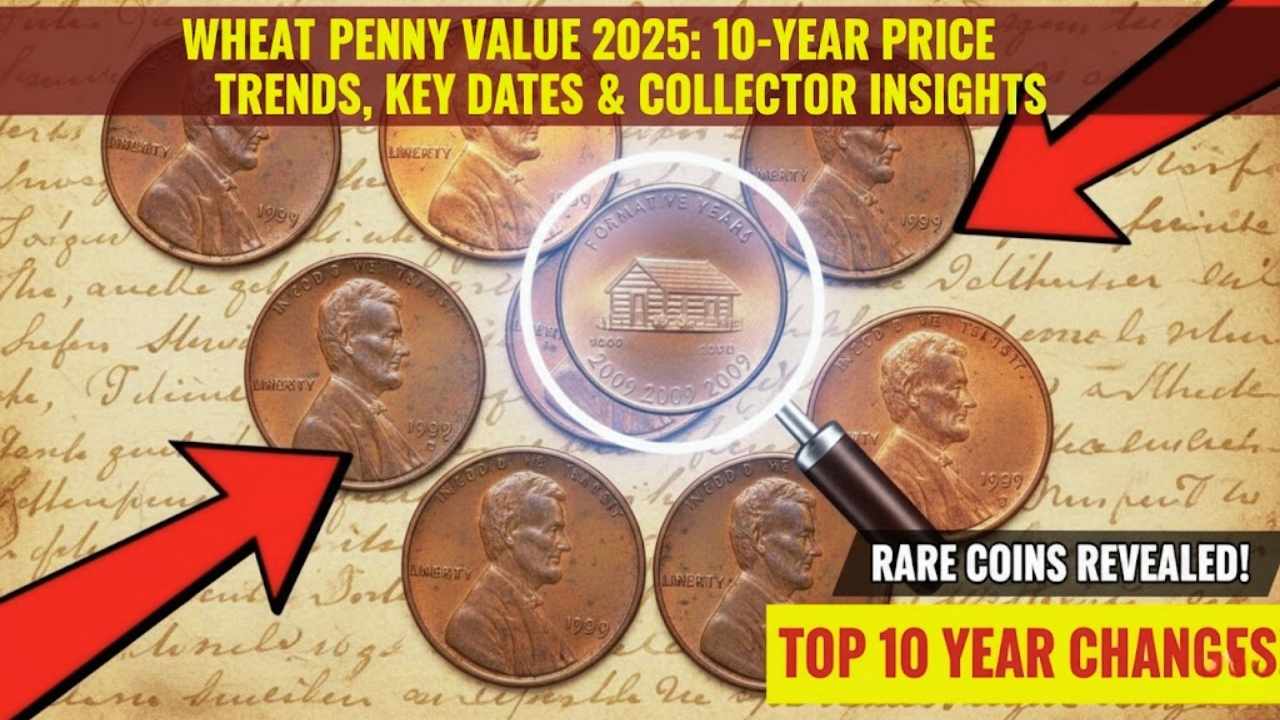
Wheat Penny Value 2025: Wheat pennies are among the most iconic and collectible coins in U.S. history. Over the past decade, their values have continued to rise, attracting both new collectors and seasoned numismatists. From rare key dates to notable mint errors, these coins offer historical significance, aesthetic appeal, and strong long-term investment potential. Understanding how their prices have evolved over the last 10 years can help collectors and investors make informed decisions.
These trends highlight how rare wheat pennies have consistently appreciated in value, particularly for key dates, error coins, and certified high-grade examples.
Early 20th-Century Wheat Penny Trends
Wheat pennies minted between 1909 and the 1930s have seen steady appreciation. Key dates like the 1909-S VDB and 1914-D have doubled or tripled in value over the last decade. Coins in top condition and certified by PCGS or NGC have experienced the highest gains. Collector competition remains fierce for low-mintage varieties, while auction results consistently show record-setting sales for high-grade specimens.
Mid-Century Wheat Penny Value Patterns
Wheat pennies from the 1930s through the 1950s have also appreciated steadily. Coins such as the 1931-S Lincoln Cent and other mid-century varieties in uncirculated condition have commanded strong premiums. Mid-century doubled die errors, including the 1944 and 1955 varieties, have grown in value due to collector awareness. Original color and luster remain critical factors influencing market demand.
Impact of Mint Errors on Value Growth
Mint errors have played a key role in the increasing value of wheat pennies. Doubled die errors like the 1955 Lincoln Cent or 1944 steel misstrikes have become particularly desirable. Social media and online marketplaces have increased exposure to these coins, driving higher premiums and faster sales at auction. Error pennies often outperform standard date-and-mint coins in both demand and long-term growth.
Influence of Coin Grading on Prices
Grading has significantly affected wheat penny values over the last 10 years. Certified coins consistently outperform raw, uncertified examples. Services like PCGS and NGC have become industry benchmarks, with gem-grade coins achieving remarkable price jumps. Even small differences in color or eye appeal can result in significant premium increases, making grading essential for serious collectors and investors.
Recent Market Interest in Wheat Pennies (2020–2025)
The past five years have seen accelerated interest in wheat pennies. Younger collectors entering the hobby, the influence of social media, and growing online marketplaces have all contributed to higher demand. Auction results show increased competition for key dates, error coins, and uncirculated rolls. Collectors searching pocket change for hidden varieties continue to drive market activity, highlighting the enduring appeal of wheat pennies.
Most Valuable Wheat Pennies of the Last Decade
The following wheat pennies have shown the strongest appreciation in value over the last 10 years:
- 1909-S VDB Lincoln Cent
- 1914-D Lincoln Cent
- 1922 No D Lincoln Cent
- 1931-S Lincoln Cent
- 1955 Doubled Die Lincoln Cent
- 1943 Copper Error Lincoln Cent
- 1944 Steel Lincoln Cent
These coins consistently top auction results and remain highly coveted by collectors and investors.
How to Evaluate Wheat Penny Values Today
To accurately assess wheat penny value, collectors should:
- Examine the date and mintmark carefully
- Compare with trusted price guides and auction results
- Consider certification for high-value coins
- Evaluate color, luster, and condition
- Look for mint errors or hidden varieties
- Track recent auction trends to determine current market value
These steps help ensure informed purchasing and investment decisions.
What Collectors Should Expect in the Coming Years
Wheat penny demand is expected to remain strong, with continued interest in key dates, mint errors, and certified coins. Online sales and social media will further boost exposure, while competition among collectors is likely to increase. High-grade and visually appealing coins will continue to command premium prices.
Current Market Trends in 2025
Collectors continue to actively seek rare wheat pennies in 2025. Key trends include:
- Increased demand for early key dates and error varieties
- Rising premiums for certified, high-grade coins
- Expansion of the collector demographic, including younger enthusiasts
- Greater reliance on social media and online marketplaces for rare finds
The wheat penny market shows both resilience and long-term growth potential.
Final Verdict
Over the last decade, wheat penny values have consistently increased due to growing collector interest, recognition of rare varieties, and rising demand for certified coins. Whether collecting for investment or enjoyment, understanding market trends, grading importance, and key varieties is essential to identify valuable wheat pennies and maximize potential returns.
Disclaimer
All values provided are estimates and may vary based on coin condition, grading, market trends, and collector demand. Always consult certified grading services or professional numismatists before buying or selling rare wheat pennies.
