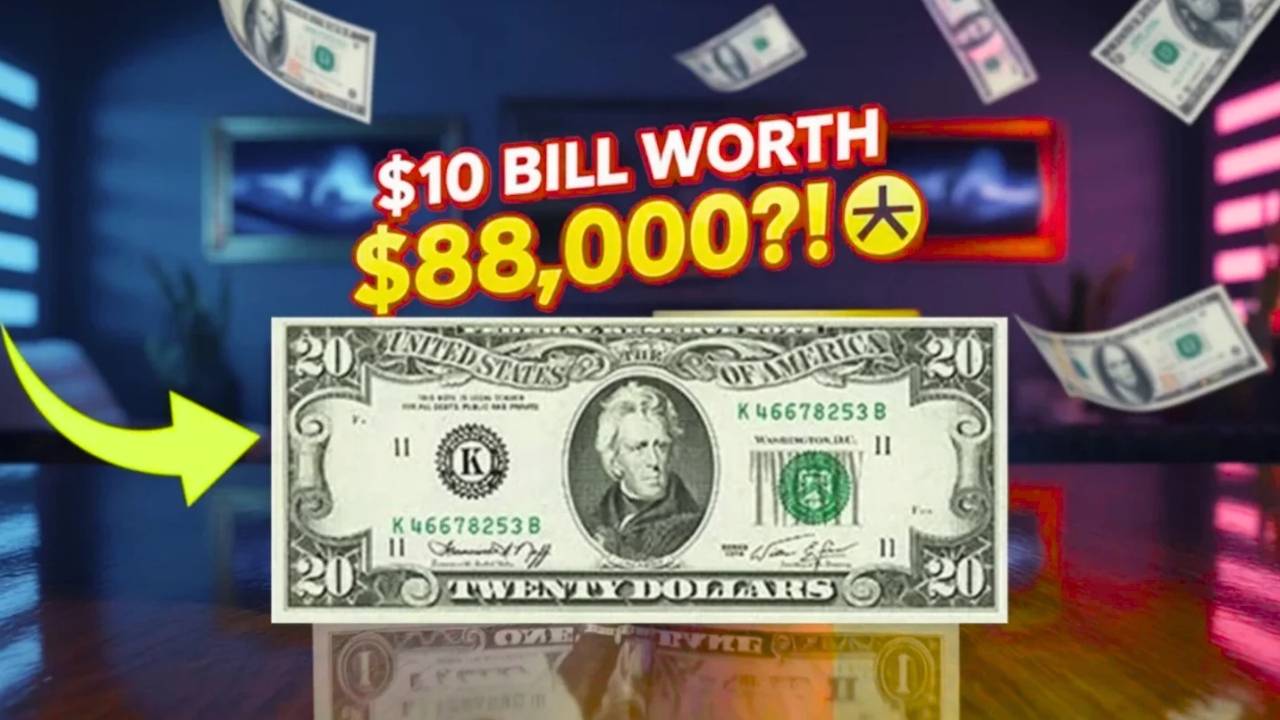
Check That $10 Bill: What appears to be an ordinary $10 bill could secretly be a rare and valuable double denomination error. These unusual notes display elements from two different denominations, making them some of the most sought-after items in the world of currency collecting. Some examples have sold for as much as $88,000, highlighting their remarkable value and rarity.
Double Denomination Error Notes Value Table
| Bill Type | Denominations Involved | Key Features | Estimated Value |
|---|---|---|---|
| $10/$1 Error | $10 front, $1 back | Misprinted reverse, color mismatch | $50,000–$88,000 |
| $20/$5 Error | $20 front, $5 back | Partially printed back from $5 | $20,000–$45,000 |
| $50/$10 Error | $50 front, $10 back | Misaligned serial numbers, color shift | $30,000–$60,000 |
| $5/$1 Error | $5 front, $1 back | Dramatic design mismatch | $15,000–$35,000 |
| $100/$20 Error | $100 front, $20 back | Rare collector example | $75,000–$120,000 |
What Is a Double Denomination Error?
A double denomination error occurs when a bill is mistakenly printed with features of two separate denominations. For example, a $10 bill might have the back of a $1 bill. These errors happen during production at the Bureau of Engraving and Printing, usually when sheets are misfed into presses or reused incorrectly. The result is a single note that combines elements of two denominations, making it both rare and highly valuable.
Why Are Double Denomination Bills So Valuable?
The rarity of these notes is the primary driver of their value. Modern bills are produced under strict quality control, so any error that escapes inspection is extraordinary. Dramatic errors, combined with excellent bill condition, can fetch tens of thousands of dollars, sometimes even approaching six-figure sums.
How Do Printing Errors Happen?
Currency is printed in multiple stages: first the background, then the denomination, serial numbers, and seals. A double denomination occurs when a sheet intended for one denomination is mistakenly fed into the press for another. For instance, the back of a $1 bill may appear on a $10 front. These errors are extremely rare due to the precision of modern printing processes.
What Does a Double Denomination Look Like?
These notes are visually striking. A $10 bill might show $1 elements on the reverse side. Fonts, colors, or alignment may appear unusual, making the discrepancy obvious to a trained eye. Many people, however, overlook these bills, mistaking them for smudges or defects.
Could You Be Holding One?
Yes, it’s possible. Some double denomination bills have been found in circulation, tucked away in wallets, collections, or boxes for decades. The key is to inspect any note that looks unusual, as it could be worth a substantial amount to collectors.
How to Verify a Double Denomination Error
If you suspect a note may be a double denomination error, do not attempt to clean or alter it. Keep it safe and contact a professional for authentication. Organizations like Paper Money Guaranty (PMG) and Professional Coin Grading Service (PCGS) can verify the bill and assign a condition grade, giving you a clear understanding of its market value.
Final Verdict
Double denomination error $10 bills are a fascinating and potentially lucrative aspect of currency collecting. Their rarity and striking appearance make them highly desirable, and some notes have sold for tens of thousands of dollars. A careful inspection of old or unusual bills could reveal a hidden treasure in your wallet.
Disclaimer
This article provides general information on double denomination error bills. Values fluctuate based on condition, rarity, and collector demand. Always consult a certified currency grading service or professional dealer before buying, selling, or attempting to authenticate any high-value note.
