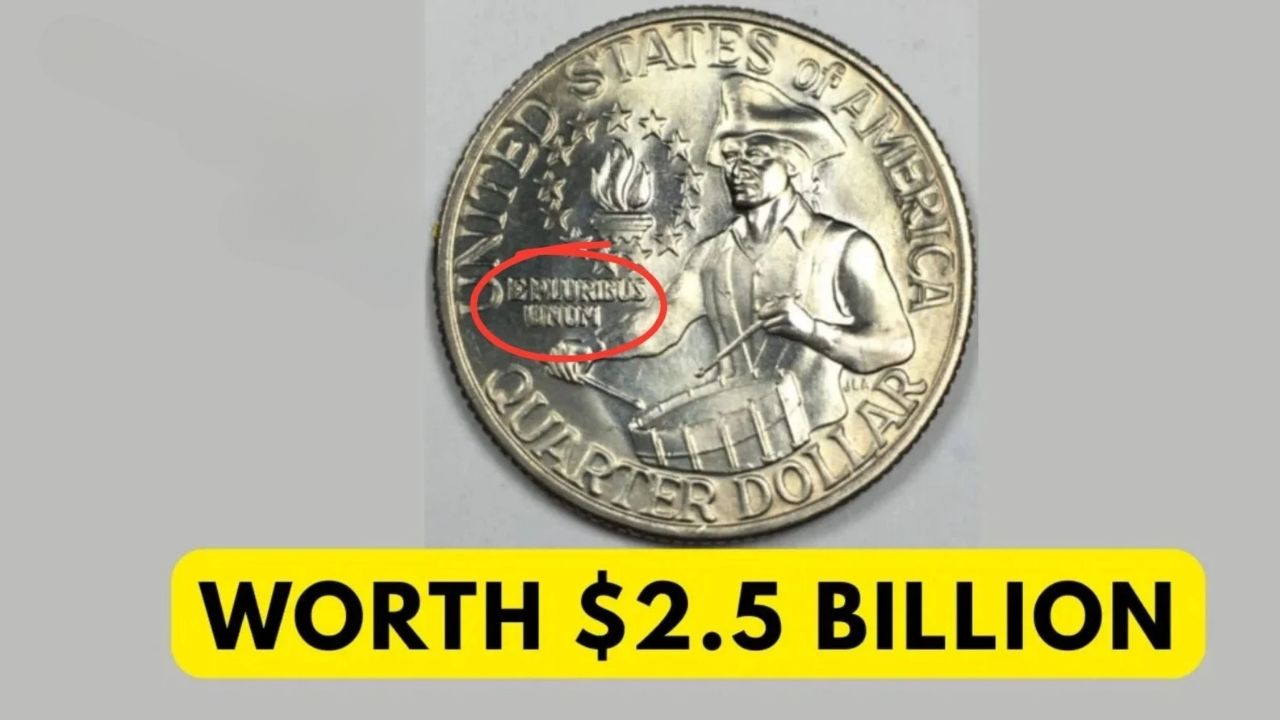
From 25 Cents to $2.5 Billion: A seemingly ordinary quarter has stunned the coin collecting world by achieving an astronomical valuation of $2.5 billion. While it is only 25 cents in face value, this unique coin has captured the imagination of collectors, historians, and treasure hunters alike. Its story demonstrates how a single piece of currency can become a legendary artifact with immense historical and monetary significance.
How a Common Quarter Became a Rare Treasure
U.S. quarters are produced in the millions every year, but some coins achieve legendary status due to minting errors, unique compositions, or experimental strikes. This particular quarter is believed to be a prototype or test coin, never intended for circulation. Its rarity, perfect condition, and historical significance have made it one of the most valuable coins in the world.
The Minting Error That Made History
Experts suggest that this quarter may have been created using experimental metal alloys or during a transitional period in U.S. Mint operations. Its origin remains a mystery, as no official records confirm its production. Some speculate it was secretly stored or accidentally released. This unknown provenance adds to its mythical value, similar to a famous artwork with an anonymous creator.
Its First Appearance Stunned Collectors
When the coin was first revealed at a major numismatic convention, it shocked collectors and appraisers. Its perfect condition, unusual composition, and historical significance set it apart from any other quarter ever seen. Once authenticated, it was insured for an estimated $2.5 billion, making it officially the most valuable quarter on record.
Why Rare Coins Command Such High Values
The value of a coin is not solely based on metal content—it’s about story, scarcity, and historical context. Collectors prize coins that are one-of-a-kind or have intriguing backstories. Auctions for rare coins can result in staggering prices, particularly for items with perfect preservation and exceptional provenance.
Cultural and Historical Impact of the Quarter
Despite being just 25 cents in face value, this quarter has become a cultural phenomenon. News coverage and collector discussions have gone viral, encouraging amateur numismatists to examine their own collections more closely. It proves that even the most ordinary items can contain extraordinary value.
Could You Be Holding a Valuable Coin?
While the $2.5 billion quarter is unique, other rare coins circulate in everyday change. Error coins, silver quarters, and limited mintage editions can be worth hundreds, thousands, or even millions. A keen eye and careful examination could reveal surprising treasures in your wallet or coin jar.
Frequently Asked Questions (FAQs)
Q: Is the $2.5 billion quarter authentic?
A: Yes, the coin has been authenticated by experts, and its valuation reflects rarity, condition, and historical significance.
Q: What makes this quarter so valuable?
A: It is a one-of-a-kind prototype or experimental coin with perfect condition and a mysterious origin.
Q: Where was it found?
A: Its exact discovery location is not publicly disclosed, but it surfaced at a major coin convention and was authenticated by professional numismatists.
Q: Can ordinary quarters be valuable?
A: Yes, quarters with errors, silver content, or limited mintage years can be worth much more than face value.
Q: How do I identify a rare coin?
A: Look for unusual features like errors, uncommon metals, or old mint years. Professional grading services such as PCGS or NGC can verify authenticity and value.
Final Verdict
The story of America’s most valuable quarter is a powerful reminder that extraordinary treasures can hide in plain sight. From its minting mystery to its record-breaking value, this coin illustrates how rarity, history, and condition create immense worth. Collectors and casual observers alike are encouraged to examine their coins carefully—who knows what hidden treasures might be waiting?
Disclaimer
This article is based on publicly available numismatic records and expert analyses. Estimated values are subject to change depending on market demand, coin condition, and authenticity. Readers should consult professional coin grading services before buying, selling, or verifying rare coins.
